10 Proven Tips for Running a Successful AV Rental Service in Singapore

A successful event can fall apart in seconds if the microphone cuts out, the projector fails, or the lighting misses the mood. In Singapore, where events often run on tight schedules and high expectations, an AV provider is not just supplying equipment. The team is protecting the experience.

Running a strong AV rental business takes more than owning speakers, screens, mixers, and lights. It requires local market awareness, reliable gear, trained crew, clear communication, and relationships that create repeat bookings. The best operators make organisers feel calm because every cable, backup plan, and timing detail has already been handled.
Here are 10 practical tips for building and running a reliable av rental service in Singapore.
Understand the Singapore events market before selling packages
Singapore has a wide mix of events, from weddings and product launches to association dinners, community events, roadshows, exhibitions, concerts, and hybrid programmes. Each segment has different needs, budgets, and risk points. A basic sound system may work for a simple solemnisation, but a ballroom dinner may need wireless microphones, stage lighting, technician support, video playback, and fast changeovers.
1. Track event formats and client expectations
Local demand shifts with venue trends, travel patterns, and audience habits. Hybrid events, live streaming, compact pop-up activations, and immersive brand experiences are now part of the event mix. At the same time, in-person events still need clear audio, clean visuals, and reliable staging.
Track what clients ask for most often:
Wireless microphones for panels, hosts, and performers
LED walls or large displays for high-impact visuals
Live streaming for remote guests
Lighting for photography and ambience
Compact systems for cafés, galleries, hotel function rooms, and outdoor spaces
Fast setups for venues with short access windows
Review enquiries every month. If several clients ask for the same item or service, that may be a signal to adjust inventory, partner with a specialist, or create a clearer package.
2. Build packages around real use cases
Many clients do not know the difference between a powered speaker, a line array, a condenser microphone, or a video switcher. They want to know what will work for their event.
Instead of only listing equipment, create packages around outcomes:
Event type | Common AV needs | Useful add-ons |
Wedding banquet | Wireless microphones, speakers, projector or screen, basic lighting | Live feed, uplights, audio recording |
Seminar or training | Speech microphones, projection, laptop input, clicker | Hybrid streaming, confidence monitor |
Roadshow | Portable PA, battery options, simple lighting | Generator support, branded audio cues |
Dinner and dance | Full sound system, stage lights, playback support | Moving lights, LED wall, effects lighting |
Live performance | Larger PA, monitor speakers, mixer, microphones | Backline, lighting operator, multitrack recording |
This approach helps clients choose faster and reduces miscommunication. It also gives the sales team a clear starting point before customising the quote.
3. Know venue rules and site constraints
Singapore venues can vary widely. A hotel ballroom, black box theatre, rooftop space, shopping mall atrium, school hall, and outdoor lawn all come with different conditions.
Before confirming any major job, ask about:
Loading bay access
Lift size and service lift timing
Setup and teardown windows
Power points and power limits
Ceiling height
Rigging restrictions
Sound limits
Rain plans for outdoor events
Required permits or venue approvals
A site visit can prevent expensive mistakes. It also shows the client that the team is serious about planning, not just dropping off equipment.
Keep equipment reliable and event-ready
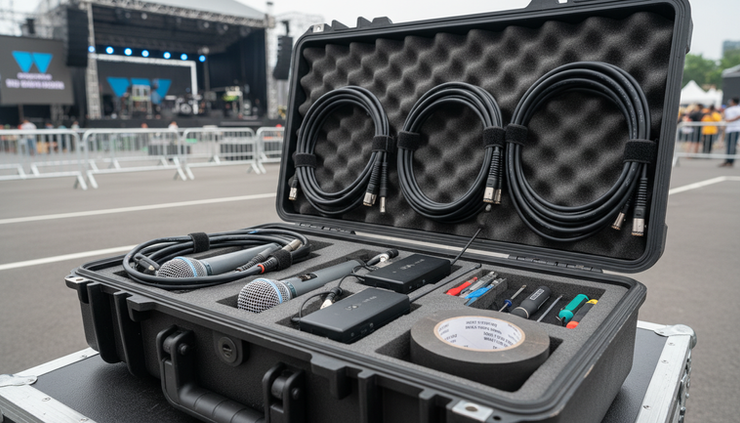
Clients remember failures more than features. A premium mixer or high-powered speaker means little if it arrives dusty, undercharged, or poorly configured. Equipment care is one of the clearest ways to stand apart in AV rentals.
4. Create a strict maintenance routine
Good maintenance should be scheduled, recorded, and repeated. Do not rely on memory. Use a simple inventory system that tracks each item by serial number, condition, location, and service history.
A practical maintenance routine can include:
Testing microphones before and after each job
Charging and cycling rechargeable batteries
Checking speaker drivers and cable connectors
Cleaning projector filters and lenses
Updating firmware only after testing stability
Inspecting stands, clamps, cases, and wheels
Labelling faulty items clearly and removing them from active stock
Build a “ready for hire” checklist for each equipment category. A speaker system checklist, for example, should include power cables, signal cables, stands, covers, and backup connectors.
5. Carry backups for mission-critical items
Some items must never rely on a single unit. Wireless microphones, playback laptops, media adapters, power strips, DI boxes, and signal cables are common failure points. Carry spares, even for small jobs.
For larger events, plan redundancy into the system. That might mean a backup microphone at the lectern, a spare laptop with the presentation loaded, or a secondary audio path for playback. The client may never notice these safeguards, which is exactly the point.
A good rule is simple: if failure would stop the event, bring a backup.
6. Train crew to set up cleanly and troubleshoot quickly
Equipment is only as effective as the individuals operating it. Technicians should understand signal flow, cable management, gain structure, basic lighting control, video input formats, and safe rigging practices. They should also know how to communicate calmly under pressure.
A trained crew can spot issues before they affect guests:
A wireless microphone frequency conflict
A laptop output set to the wrong resolution
A speaker placed too close to an open microphone
A lighting fixture blocking a walkway
A power load that needs to be split safely
Clean setup matters too. Taped-down cables, labelled channels, tidy racks, and safe walkways send a clear message that the team cares about the event environment.
Win more clients through clear marketing and strong partnerships

The Singapore events market is relationship-driven. A polished website helps, but repeat work often comes from planners, venues, production partners, and clients who trust the team to deliver without drama.
7. Make your marketing practical and specific
Effective marketing should answer the questions people already have. Avoid vague claims and focus on clarity.
A strong website for an av rental service in Singapore should show:
Event types supported
Sample packages
Photos of actual setups
Service areas across Singapore
Crew support options
Common equipment available
Clear enquiry steps
Case-style examples without revealing client details
Use plain language. Instead of saying “premium audio solution”, explain what the client gets: “two speakers, one mixer, two wireless microphones, setup, testing, and technician support for up to four hours.”
Search visibility also matters. People often look for help when they already have a venue and date. Create useful pages for common needs, such as wedding sound system rental, seminar AV support, LED wall rental, live streaming support, and outdoor event audio.
8. Build strong relationships with event planners and venues
Event planners need vendors who make their job easier. That means fast replies, accurate quotes, clear technical advice, and no surprises on event day.
To become a preferred partner, focus on habits that reduce stress:
Reply quickly, even if the full quote needs more time
Ask smart questions about the programme flow
Share floor plan notes when needed
Flag risks early
Keep pricing clear
Arrive on time
Respect venue staff and house rules
Send post-event notes when useful
Venue relationships are just as valuable. If a hotel, gallery, or event space knows your team protects walls, floors, power systems, and schedules, they are more likely to welcome you back. Treat venue crews as partners, not obstacles.
Deliver service that clients remember for the right reasons

Great customer service in this industry is not only about being polite. It is about reducing uncertainty from the first enquiry to the final teardown.
9. Make the enquiry and quotation process easy
A slow or confusing quote can lose a client before any technical discussion begins. Use a structured enquiry form, but keep it short enough that people finish it.
Ask for the key details:
Event date and time
Venue name
Indoor or outdoor location
Guest count
Event type
Programme outline
Required microphones
Screen or display needs
Streaming or recording needs
Setup and teardown timing
After receiving the enquiry, respond with a clear recommendation. If the client asks for something unsuitable, explain why and offer a better option. For example, a small portable speaker may not be enough for an outdoor performance. A clear explanation builds trust, especially with clients who are not technical.
Quotes should state what is included, what is excluded, and what may trigger extra charges. Delivery timing, overtime, additional crew, last-minute changes, and venue access delays should be addressed before confirmation.
10. Run every event with a service checklist
A checklist protects both the client and the AV team. It turns good intentions into repeatable service.
Create checklists for each stage:
Before the event
Confirm venue access and contact person
Recheck the programme schedule
Prepare equipment list and backups
Test all key gear
Confirm power and layout
Share arrival timing with the client
During setup
Place speakers and lights safely
Tape and cover cables
Test microphones from the actual stage area
Check video sources with client devices
Run audio playback at event volume
Confirm lighting scenes or cues
During the event
Keep a technician near the control area
Watch for battery levels
Monitor audio feedback
Stay ready for programme changes
Communicate quietly with organisers
After the event
Tear down safely
Check equipment condition
Note any issues
Thank the venue contact
Follow up with the client
A simple post-event message can lead to repeat business. Ask whether everything met expectations and whether the client has upcoming events. If something went wrong, address it quickly and professionally. Owning the issue often protects the relationship.
FAQ

How much equipment should a new AV rental business own?
Start with reliable core items that serve common events, such as speakers, microphones, mixers, stands, cables, and basic lighting. Rent or partner for specialised items until demand becomes steady enough to justify buying.
What is the most common mistake AV rental companies make?
One common mistake is under-planning. The gear may be suitable, but poor access checks, weak cable management, missing adapters, or no backup equipment can create avoidable problems on event day.
How can an AV company attract more event planners?
Be easy to work with. Provide clear quotes, quick replies, accurate technical advice, and dependable event-day support. Planners value vendors who solve problems early and communicate clearly.
Is live streaming still worth offering in Singapore?
Yes, for many events. Even when guests attend in person, organisers may need remote access for overseas speakers, regional teams, family members, or recorded content after the event.
What should clients look for when choosing an AV provider?
Clients should look for proven event experience, clean equipment, transparent pricing, technician support, backup planning, and a team that asks detailed questions before recommending a setup.
Build a service that earns repeat bookings
A successful AV business in Singapore is built on trust. Clients need to know the sound will be clear, the visuals will work, the crew will arrive prepared, and any issue will be handled without panic.
The strongest operators study the local market, maintain equipment carefully, train their teams, market services clearly, and build long-term relationships with planners and venues. Those habits turn one-off bookings into repeat work.
For event teams that need dependable technical support, explore AV rental services in Singapore and plan the AV experience with the right crew from the start.


Comments